Steam Heat & Radiator Repair in Midwood, Brooklyn
Eliminating radiator water hammer, fixing hissing vents, resealing leaking supply valves, and rebalancing uneven room temperatures.
Schedule Radiator Troubleshooting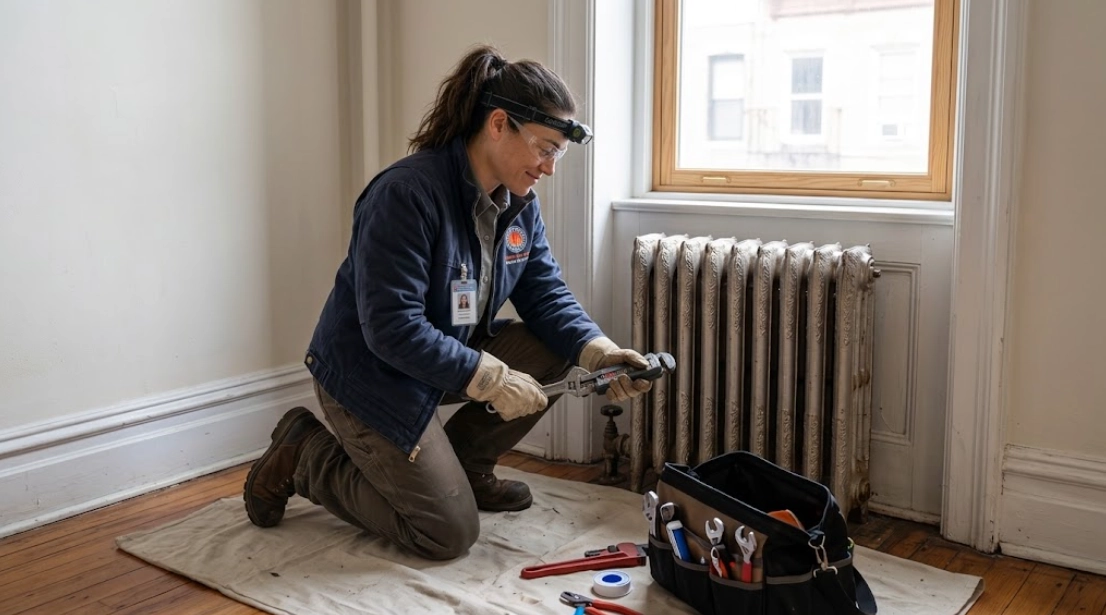
Tuning Vintage Steam Radiators for Quiet, Even Warmth
Cast-iron radiators are the backbone of comfort across Midwood's pre-war apartment buildings and detached brick residences. When working properly, steam heat delivers gentle, radiant warmth. However, when valves fail or pipes fall out of alignment, homeowners face deafening pipe clanking, spitting air vents, and freezing bedrooms. Our specialized radiator repair Midwood Brooklyn team restores silent, balanced heating performance.
Radiator performance is inextricably connected to central boiler operation. An improperly set boiler pressuretrol or surging waterline will flood steam mains, overwhelming radiator vents with dirty water. Our technicians evaluate both your radiators and your central boiler repair in Midwood system to eliminate problems at their source.
Common Radiator Symptoms We Fix
Recognizing the underlying causes of radiator malfunctions:
- Cold Radiator Despite Hot Boiler: Stuck air vents prevent cold air from escaping, creating an air pocket that stops steam from entering the radiator cast iron.
- Deafening Clanking & Hammering: Improper pitch allows condensed liquid water to pool in the radiator base. When incoming steam hits standing water, violent vacuum collapse causes severe water hammer.
- Leaking Angle Supply Valves: Dried graphited valve stem packings allow steam and rusty water to seep onto hardwood floors whenever heat cycles on.
- Continuous Hissing & Spitting: Worn internal float needles allow scalding steam vapor to blow into living spaces.
One-Pipe vs. Two-Pipe Steam Systems
Troubleshooting protocols differ fundamentally based on system piping layout:
- One-Pipe Steam: Steam enters and condensed liquid drains back down the exact same single pipe. The radiator valve must be fully open or fully closed—never throttled—and the radiator must pitch downward toward the valve.
- Two-Pipe Steam: Steam enters through a supply valve on one end, and condensed water drains through a thermostatic steam trap on the opposite end into a separate return line. Leaking steam traps short-circuit steam directly into dry returns, wasting massive fuel.
Tired of Clanking Pipes or Cold Bedrooms?
Speak with our Brooklyn steam heating technicians to schedule valve repacking, radiator re-pitching, and precision vent balancing.
Call (315) 202-8009 for Radiator ServiceThe Importance of Steam Radiator Pitching and Vent Sizing
In single-pipe steam heating, gravity is the sole force moving condensed water back to your boiler. Settling floors in vintage Brooklyn homes often cause radiators to sag backward, pooling water at the vent side. Inserting precision radiator shims beneath the legs restores the required quarter-inch downward slope toward the supply valve, ending water hammer instantly.
Furthermore, installing proportional thermostatic radiator vents (TRVs) or adjustable-orifice air vents allows fine-tuning room temperatures. Faster-venting valves in cold, drafty rooms allow steam to fill those radiators first, while slower-venting valves in naturally warm rooms prevent overheating and save fuel. If your heating system is also experiencing central burner issues, review our Boiler Replacement or domestic Water Heater Repair services.
Safety Warning: Never Disassemble Hot Radiator Valves
Steam radiators operate under pressurized vapor reaching temperatures of 212°F to 215°F. Attempting to force corroded brass valve stems, dislodge frozen air vents, or disassemble unions while the boiler is running risks severe scalding burns and structural flooding. Our technicians always shut down heating zones and verify depressurization before performing mechanical work.
Discover our full Brooklyn coverage on our Service Areas overview, or request service via our direct phone line on the Contact page.
Frequently Asked Questions About Radiator Repair
Why is my cast-iron steam radiator banging or knocking violently?
Loud banging, known as water hammer, happens when rising high-speed steam collides with condensed water pooled inside the radiator or supply pipe. This is typically caused by a radiator pitched away from the shutoff valve, a partially closed valve, or a clogged air vent preventing drainage.
Why is one room freezing while the rest of my house is overheating?
Uneven heating is usually caused by improperly balanced air vent sizes. Fast-venting valves in nearby rooms fill those radiators quickly, causing the boiler to shut off before steam ever reaches distant or slow-venting radiators on upper floors.
Can I replace a hissing or spitting radiator air vent myself?
A spitting vent indicates internal float mechanism failure or high boiler waterline surging. Because steam systems operate with scalding vapor and vintage pipe threads can snap easily inside cast-iron spuds, professional service ensures safe replacement without water damage.